Choosing a solar mounting system is crucial for maximizing efficiency. According to the Solar Energy Industries Association (SEIA), well-installed solar panels can increase energy production by up to 20%. This statistic alone emphasizes the importance of selecting the right mounting option.
When asking, "How to choose the right solar mounting system for my roof," consider factors like roof type and local weather. Each mounting system has its pros and cons. For instance, a ground-mounted system may perform better in certain climates but is not always feasible. Misalignment can also reduce energy output.
It's vital to consult with professionals. Their expertise can guide you through available options. Ensuring your system's longevity and efficiency requires informed decisions. Reflect on your specific needs and environmental conditions to identify the best solution for your roofing. The right choice can lead to significant benefits, not just in energy savings, but in sustainability and property value.
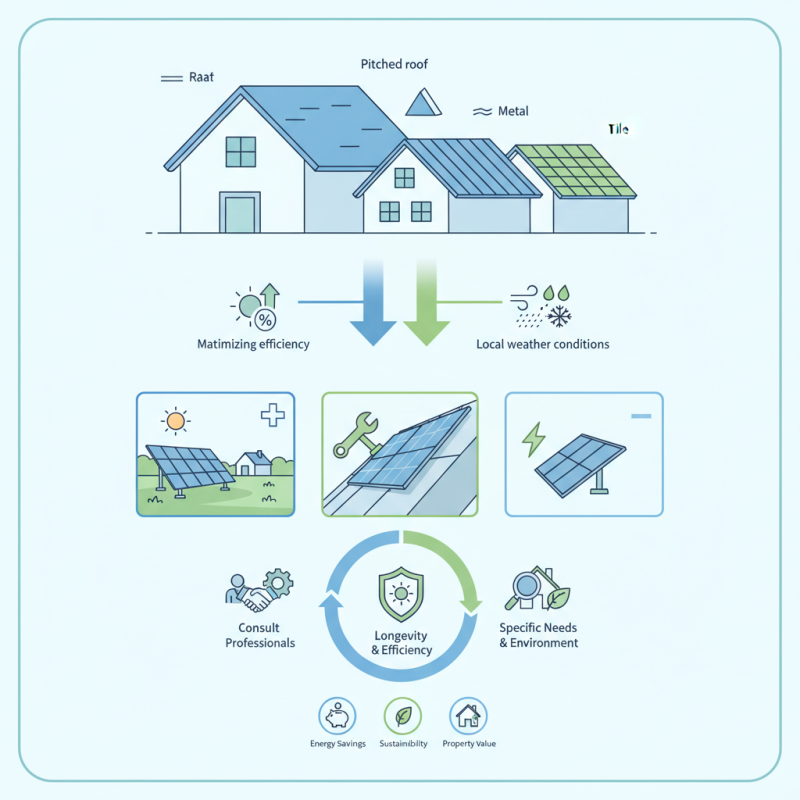
Understanding your roof type is essential when selecting a solar mounting system. Different roofs present unique challenges. Flat roofs may utilize ballasted systems, while pitched roofs require brackets and rails. According to a study by the National Renewable Energy Laboratory, improper mounting can reduce system efficiency by up to 25%. This makes roof analysis critical.
You should also consider roof material. Asphalt shingles are common, but metal roofs can offer longer durability. Each material responds differently to mounting techniques. Solar panels on metal roofs can lead to more robust systems. Experts recommend ensuring your roof can handle the added weight and stress.
Tips: Regularly inspect your roof's condition. Check for loose shingles or structural damage. Understanding the age of your roof can also influence your decision. If your roof is nearing the end of its life, it may need replacing before adding solar panels. Take these factors into account to avoid costly future repairs.
| Roof Type | Mounting System Type | Installation Difficulty | Typical Cost Range | Lifespan (Years) |
|---|---|---|---|---|
| Asphalt Shingles | Rail Mounted | Easy | $2,500 - $3,500 | 25+ |
| Tile Roof | Micro-Inverters | Moderate | $3,000 - $4,500 | 25+ |
| Metal Roof | Clamp Mounted | Easy | $2,800 - $4,000 | 30+ |
| Flat Roof | Ballasted Mount | Moderate | $3,500 - $5,000 | 25+ |
| Wood Shakes | Rail Mounted | Difficult | $3,000 - $4,500 | 20+ |
When evaluating solar mounting systems, one major decision arises: fixed versus adjustable systems. Fixed systems are simpler and often less costly. They are designed to hold solar panels at a specific angle, usually optimized for average sunlight. According to a report by the National Renewable Energy Laboratory, a fixed roof mounting system can yield up to 90% of an adjustable system's energy production in many regions. However, they do not adapt to seasonal changes in sun angles.
Adjustable systems, on the other hand, allow you to change the angle of the panels. This flexibility maximizes energy capture throughout the year. A study by the Solar Energy Industries Association noted that adjustable systems could increase energy productivity by up to 30% compared to fixed systems. However, they come with higher installation and maintenance costs. Finding the right balance of cost-effectiveness and energy output is essential.
It’s also crucial to consider your specific roof condition. Some roofs may not support heavier adjustable structures. Cracks or loose shingles could worsen with added weight. An installation that looks optimal might not be practical if the roof can't bear the load. Assess your roof's integrity carefully.
When selecting a solar mounting system, evaluating environmental factors is crucial. Wind speed and direction can significantly affect the stability and performance of solar panels. In regions prone to high winds, a mounting system that can withstand these forces is essential. According to the National Renewable Energy Laboratory (NREL), wind forces can increase the load on solar panels by up to 50%. This highlights the importance of selecting a robust system designed for your local wind conditions.
Snow load is another critical consideration. In areas with heavy snowfall, the structural integrity of the mounting system must be able to handle additional weight. The American Society of Civil Engineers warns that snow accumulation can lead to serious damage if unsupported. For reference, a foot of wet snow can weigh approximately 20 pounds per square foot. Therefore, choosing a mounting system that meets or exceeds the local snow load requirements ensures the longevity and safety of the installation.
Sun exposure plays a pivotal role in generating optimal energy output. Areas with minimal shading and maximal sun exposure boost solar efficiency. The Solar Energy Industries Association (SEIA) suggests that systems installed in regions with over six peak sunlight hours can produce significantly more energy. Yet, it's necessary to analyze your roof's orientation and potential shading from trees or buildings, as these variables can diminish performance. The combination of these factors demands careful assessment to avoid costly mistakes in system design and installation.
Choosing the right solar mounting system for your roof is crucial. You need to evaluate cost-effectiveness and installation requirements carefully. First, consider the type of roof you have. Flat roofs and pitched roofs require different mounting systems. Ask an expert about your specific situation.
Cost is a major factor. Look at initial expenses versus long-term savings. Some systems might be cheaper upfront but cost more to install. Installation requirements vary widely. Some systems are easy to install, while others demand professional help. Know your limits and skills before deciding.
Also, think about the weather in your area. Different materials respond differently to harsh conditions. A less durable system may save money now but could lead to higher costs later. Balance your budget with what is best for your roof's longevity. Don't shy away from asking questions. Engaging with knowledgeable professionals can lead to better decisions.
Choosing the right materials for a solar mounting system is crucial for durability and performance. The materials used directly impact the longevity of the installation. According to a report from the Solar Energy Industries Association, over 90% of solar systems are designed to last 25 years or more. However, this lifespan greatly depends on the quality of the mounting system.
Aluminum and stainless steel are the most common materials used. Aluminum is lightweight yet strong, providing excellent corrosion resistance. Stainless steel, while heavier, offers greater robustness in extreme weather conditions. However, some installers overlook the importance of coatings. An uncoated steel can rust quickly. Proper coatings, like galvanization, can significantly extend the lifespan of metal mounts.
It's notable that many installation failures arise from improper material choices. Recent case studies indicate that around 15% of solar system malfunctions stemmed from inadequate mounts. Selecting the right components based on local weather patterns is essential. Areas with heavy snowfall or high winds require specific designs. Selecting incorrect materials can lead to costly repairs or replacements. Pay attention to regional climate traits when making decisions.
: Different roof types present unique challenges. This affects how solar panels are mounted and their efficiency.
Roof materials like asphalt shingles and metal respond differently. Metal roofs provide better durability and performance.
Regularly inspect for loose shingles and any structural damage. Also, consider the roof's age.
An aging roof may need replacement. Adding panels can cause problems if the roof is near its end.
Aluminum and stainless steel are common. Each offers unique benefits like corrosion resistance and strength.
Coatings protect metal from rust. Uncoated materials can deteriorate quickly, affecting longevity.
Areas with heavy snowfall or high winds need specific mounting designs. Incorrect choices may lead to failure.
Around 15% of malfunctions are due to improper material choices. It’s crucial to select appropriately.
Improper mounting can reduce efficiency by up to 25%. Proper analysis before installation is critical.
Most systems are designed to last over 25 years, depending on the quality of the mounts and installation.
Choosing the right solar mounting system for your roof involves a comprehensive understanding of your roof's type and structure, as these factors significantly influence the installation process. Begin by evaluating whether your roof is flat or sloped, and consider its material and orientation to maximize solar panel efficiency. Next, explore the different types of mounting systems, such as fixed and adjustable options, to determine which best suits your needs.
Additionally, it is crucial to assess environmental factors, including local wind and snow loads, as well as overall sun exposure, to ensure the durability and performance of your solar system. Finally, analyze the cost-effectiveness and installation requirements of various mounting systems, while selecting materials that offer long-lasting benefits. By following these steps, you'll be well-equipped to answer the question of how to choose the right solar mounting system for my roof, ensuring optimal energy production and longevity.

Trike Solar