7 Tips to Clean Solar Panels on a High Carport Roof?

Time:2026-10-20 Author:Sophia
0%

Cleaning solar panels on a high carport roof requires more than a bucket and a hose. Height, roof slope, fragile modules, and electrical equipment create real safety concerns. Before starting, inspect the access route, weather conditions, panel surface, and carport structure. A wet roof can become dangerously slippery within minutes.

This guide explains How to clean solar panels on a high carport roof through seven practical tips. The advice focuses on safe access, suitable tools, gentle cleaning methods, and careful inspection. It also considers manufacturer instructions, because panel coatings and mounting systems differ. A soft brush, purified water, and a telescopic pole may reduce contact with the panels. Never step directly on the modules.

Small details matter. Dust may hide around frame edges. Bird droppings can harden under strong sunlight. Rinsing too quickly may leave mineral spots. Professional solar technicians can handle steep, high, or difficult roofs with proper fall protection. That option is often wiser than saving a few minutes.

Some cleaning attempts still go imperfectly. Water may dry too fast, or a brush may miss the lower corners. That is normal, but it deserves review. Track the cleaning date, visible dirt, and energy performance afterward. These notes help identify recurring problems without guessing. With patience and a cautious routine, cleaner panels can support more consistent solar output while protecting people, equipment, and the roof.
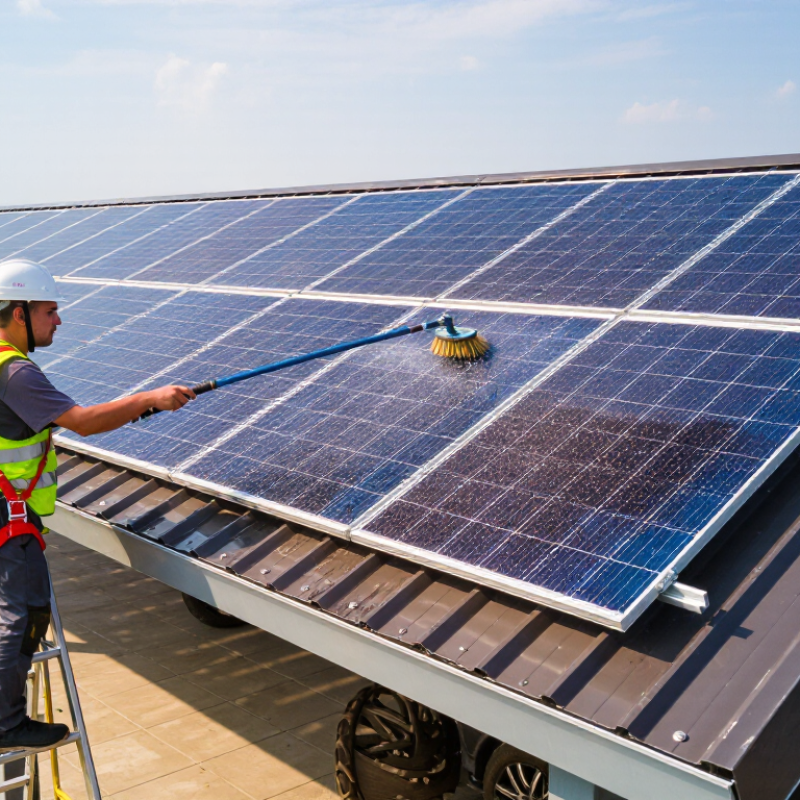
7 Tips to Clean Solar Panels on a High Carport Roof?

Assess Roof Access, Weather, and Electrical Safety First

7 Tips to Clean Solar Panels on a High Carport Roof

Assess the roof before carrying any equipment upward. From the ground, check the roof slope, edge protection, ladder position, and visible damage. A high carport roof needs a stable access plan, not improvisation. Use approved fall protection when required, and never step directly on solar panels. If the surface feels unstable, hire a qualified professional.

Check the forecast before cleaning. Choose a dry, cool morning with little wind. Wet roofing becomes slippery, while hot panels can dry water too quickly and leave mineral marks. Avoid storms completely. Even cloudy panels can produce electricity. Turn off the system according to its instructions, but remember that exposed panels may still generate power. Keep water away from inverters, connectors, and damaged cables. Never spray electrical equipment.

Inspect the panels from the ground first. Remove loose leaves with a soft brush or telescoping tool. Use clean water and a mild, non-abrasive solution when necessary. Do not use pressure washers, harsh chemicals, or metal scrapers. Work gently. A quick rinse seems efficient, but it may spread grit across the glass. Clean small sections and rinse them fully. Stop if you notice cracked glass, loose wiring, or unusual heat. Arrange an electrical inspection instead. Even experienced workers can misjudge a roof edge, especially when glare hides the slope. Safety should shape the cleaning method, not follow it.

Gather Soft-Cleaning Tools and Choose a Panel-Safe Solution

Cleaning solar panels on a high carport roof requires careful preparation. Loose grit can scratch the glass, while harsh chemicals may weaken seals. Gather a soft microfiber mop, a soft-bristled brush, a bucket, clean water, and a stable extension pole. Wear slip-resistant footwear, and avoid stepping directly on the panels. If the roof is steep, wet, or difficult to access, use a qualified professional instead.

Tip 1: Choose a panel-safe solution. Lukewarm water often removes light dust and bird residue. For greasy marks, use a small amount of mild, pH-neutral soap diluted in water. Avoid abrasive powders, strong solvents, and household cleaners containing ammonia. Test the solution on a small corner first. I once used too much soap during a rushed cleaning, leaving a cloudy film that required extra rinsing.

Tip 2: Clean during a cool, cloudy period. Hot panels dry water too quickly and create mineral spots. Rinse gently before wiping, then move the soft mop in straight, overlapping strokes. Do not use high-pressure spray near electrical connections. Tip 3: Inspect your tools before reaching the roof. A worn brush can trap grit and cause fine scratches. Replace it. Finally, rinse with clean water and check the surface from several angles. Some residue is easy to miss in direct sunlight.

Remove Loose Dust and Debris Without Scratching the Glass

Cleaning solar panels on a high carport roof requires patience, stable footing, and careful dust removal. Loose grit can act like sandpaper when dragged across glass. Work on a cool, dry morning, and stop if wind makes the panels or roof unsafe. Use approved fall protection and never step directly on the panels.

Tip 1: Remove loose debris without touching the glass first. Use a soft, long-handled brush with clean, non-abrasive bristles. Move gently from the upper edge downward. Do not use a stiff broom, scraper, or dry cloth. Small stones may hide beneath leaves, so inspect the surface from several angles. A low-pressure hose can rinse away fine dust before brushing.

Tip 2: Rinse before wiping. If sticky bird residue remains, soak it with clean water for several minutes. Then use a soft microfiber pad and light pressure. Avoid circular scrubbing, which can spread grit across the glass. Do not clean under intense sunlight, because water can evaporate quickly and leave mineral spots. I once rushed this step and had to repeat the entire panel.

Tip 3: Keep tools clean. A brush dropped on the ground should not return to the roof. Use separate water for rinsing and washing, especially where airborne dust is heavy. Check the glass afterward for streaks, trapped leaves, or new scratches. If access feels unstable, hire a trained solar maintenance professional instead of stretching from the carport edge.

Wash Solar Panels Gently to Prevent Streaks and Water Spots

Cleaning solar panels on a high carport roof demands patience, not force. Field technicians often find that streaks begin with hot glass and dirty water. Work during a cool, cloudy morning. Inspect the panels from the ground first. Do not step on the panels. Use approved roof access, stable footing, and fall protection when required. If access feels unsafe, stop and contact a qualified professional.

Use a soft brush or clean microfiber pad with plain water. Avoid abrasive sponges, strong detergents, and household glass cleaners. They can damage coatings or leave a sticky film. Rinse the brush often. A gentle stream removes loose dust without driving grit across the surface. Wash from the upper edge downward. Keep the strokes light and even. That matters.

Hard water can create white spots as it dries. Filtered or demineralized water helps reduce them. Use a rubber squeegee with a clean blade, pulling in one direction. Dry the edges with a lint-free cloth. Never let dirty runoff dry on the lower frame. Check for bird residue, cracks, loose wiring, or unusual discoloration before washing. Do not touch electrical components. A final rinse is where many cleaners become careless. Perfect results are not always realistic, especially after windy weather. If marks remain, repeat gently instead of scrubbing harder. Panel instructions and local safety requirements should guide every cleaning session.

7 Tips to Clean Solar Panels on a High Carport Roof

Wash solar panels gently to prevent streaks, mineral residue, and water spots. Use safe access equipment and avoid cleaning during hot, sunny conditions.

The chart shows standard water-hardness categories measured as milligrams per liter of calcium carbonate (mg/L as CaCO₃). Harder water contains more dissolved minerals that can remain on the glass after drying, so soft, filtered, or deionized water can help reduce spots.

Seven Gentle Cleaning Tips

  1. Choose a cool, cloudy time of day so water does not evaporate too quickly.
  2. Inspect the carport roof, panel frame, cables, and access route before climbing.
  3. Use fall protection and a stable ladder or professional roof-access system.
  4. Remove loose dust and leaves with a soft brush or low-pressure rinse first.
  5. Wash with clean water and a soft sponge or microfiber tool.
  6. Avoid abrasive pads, harsh chemicals, pressure washers, and walking on the panels.
  7. Rinse thoroughly and use a soft rubber squeegee to remove standing water before it dries.

Inspect the Finished Panels and Set a Safe Cleaning Schedule

After cleaning panels on a high carport roof, inspect them again in daylight. Look for cracked glass, loose clamps, exposed wiring, and water trapped near frames. A clean surface can still hide damage. I once treated spotless panels as proof of good maintenance. That was too simplistic.

Check the inverter or monitoring data after the panels dry. Compare output with similar weather from the previous week. IEA PVPS Task 13 reports that soiling commonly reduces annual solar yield by 2–4%, while dusty locations may experience higher losses. A sudden output decline may indicate more than dirt. It could signal shading, cable damage, or a failed module.

Build the cleaning schedule from evidence, not habit. Start with quarterly inspections, then adjust after rainfall, pollen seasons, construction dust, or bird activity. Monthly checks may be sensible near busy roads. Avoid walking directly on panels, and use proper fall protection for elevated carports. The U.S. Bureau of Labor Statistics recorded 395 fatal construction falls in 2022, showing why roof access needs serious controls. Keep a simple log with cleaning dates, weather, photos, and power readings. The schedule may be imperfect at first. Review it after three months.

7 Tips to Clean Solar Panels on a High Carport Roof? - Inspect the Finished Panels and Set a Safe Cleaning Schedule
Tip What to Do Practical Standard Recommended Schedule Safety or Quality Check
1Inspect before climbing Examine the roof access route, carport structure, panel frames, cables, mounting hardware, and visible damage from ground level. Look for cracked glass, loose frames, exposed wiring, corrosion, water intrusion, bird nests, and heavy dirt deposits. Before every cleaning Do not climb onto the roof or touch damaged electrical components. Use a qualified solar or roofing professional when defects are found.
2Choose safe weather Clean when the panels are cool and the roof is dry. Avoid rain, frost, strong wind, lightning, and direct hot sunlight. Early morning or a cool, overcast period reduces rapid evaporation and the risk of thermal shock or water spotting. Each cleaning visit Never work on a wet or slippery high roof. Follow local fall-protection requirements and use suitable access equipment.
3Control electrical risk Review the system shutdown procedure and keep water away from inverters, connectors, junction boxes, and cable entry points. Solar panels can produce DC electricity whenever light is present. Turning off the inverter does not necessarily remove voltage from the panels or wiring. Before and during every visit Do not disconnect plugs, open electrical enclosures, or spray electrical equipment. A licensed professional should handle electrical isolation.
4Remove loose debris first Use a soft, non-abrasive brush or a soft squeegee with an extension pole to remove leaves, dust, and bird residue. Work from the upper edge toward the lower edge with light pressure. Do not use metal tools, abrasive pads, or harsh scraping. Whenever visible debris covers the surface Keep tools from sliding onto vehicles or people below, and never step directly on the solar modules.
5Wash with suitable water Rinse with clean, low-mineral water and use a mild, non-abrasive cleaning solution only when permitted by the panel manufacturer. Use gentle water pressure and a soft brush or squeegee. Avoid pressure washers, solvents, abrasive cleaners, and concentrated detergents. During each planned wash Hard-water residue can leave mineral spots. A final rinse with demineralized or distilled water may reduce spotting where local water is hard.
6Inspect the finished panels After cleaning, check for streaks, remaining bird droppings, chipped glass, frame movement, cable damage, standing water, and blocked drainage paths. The surface should be free of heavy deposits and the mounting system should remain stable. Compare monitoring data with normal production after the next sunny period. Immediately after cleaning and within 24–48 hours of normal operation A sudden unexplained production drop, hot connector, burning smell, or damaged cable requires professional service.
7Set a condition-based schedule Record cleaning dates, weather, visible soiling, and energy production so the interval can be adjusted to the site. Use twice-yearly cleaning as a starting baseline, then clean sooner when dust, pollen, bird activity, construction debris, or measurable output loss is persistent. Review every 3–6 months High carports may need professional cleaning because fall exposure, roof slope, access height, and vehicle traffic increase the risk of injury or property damage.
Planning note: Always follow the solar-panel manufacturer’s maintenance instructions, the electrical system documentation, and applicable local workplace and fall-protection regulations. Cleaning is not automatically required after every rainfall; persistent soiling and measurable performance loss are better indicators.

FAQS

What tools are safe for cleaning elevated solar panels?

Use a soft microfiber mop, soft-bristled brush, bucket, clean water, and stable extension pole. Wear slip-resistant footwear. Do not step on the panels.

Which cleaning solution should I use?

Lukewarm water handles light dust and bird residue. For greasy marks, dilute a small amount of mild, pH-neutral soap. Avoid abrasive powders, strong solvents, and ammonia-based cleaners. Test a small corner first.

When is the best time to clean solar panels?

Choose a cool, cloudy morning. Hot glass dries water too quickly and leaves mineral spots. Cloudy weather helps.

How should I wash the panel surface?

Rinse gently before wiping. Move the soft mop in straight, overlapping strokes. Work from the upper edge downward. Use light, even pressure.

How can I prevent streaks and white water spots?

Rinse the brush often, so trapped grit does not scratch the glass. Filtered or demineralized water can reduce white spots. Use a clean rubber squeegee in one direction, then dry the edges.

Can I use high-pressure water or household glass cleaner?

Avoid high-pressure spray near electrical connections. Household glass cleaners may damage coatings or leave sticky residue. A gentle stream is safer. Keep it simple.

What should I do if the roof access feels unsafe?

Stop cleaning when the roof is steep, wet, unstable, or difficult to access. Use approved roof access and required fall protection. Contact a qualified professional instead. Safety matters more than spotless glass.

What should I inspect after cleaning?

Check for cracked glass, loose clamps, exposed wiring, trapped water, and unusual discoloration. Review the panels from several angles in daylight. A clean surface can hide damage. I once mistook spotless panels for good maintenance.

How often should solar panels be cleaned?

Begin with quarterly inspections, then adjust for rainfall, pollen, construction dust, and bird activity. Monthly checks may help near busy roads. Record dates, weather, photos, and power readings. The schedule may be imperfect at first.

What if energy output remains low after cleaning?

Compare dry-panel output with similar weather from the previous week. Dirt may reduce annual yield by roughly 2–4%, with higher losses in dusty areas. A sudden decline could involve shading, cable damage, or a failed panel. Do not assume dirt is the answer.

Conclusion

Cleaning solar panels on a high carport roof requires careful planning, patience, and the right equipment. Before starting, assess the roof structure, access points, weather conditions, and electrical risks. Use stable ladders, appropriate fall protection, and avoid working during wind, rain, or extreme heat. The best approach to How to clean solar panels on a high carport roof is to prepare soft brushes, a squeegee, clean water, and a panel-safe cleaning solution that will not damage the glass or seals.

Begin by removing loose dust, leaves, and other debris without scraping the surface. Wash the panels gently with clean water and a soft tool, working from top to bottom to reduce streaks and water spots. Avoid harsh chemicals, abrasive materials, and excessive pressure. After cleaning, inspect the panels for remaining marks, cracks, loose wiring, or other visible issues. Establish a safe cleaning schedule based on local dust, pollen, and weather conditions, and arrange professional assistance whenever roof access or electrical safety is uncertain.

Sophia

Sophia

Sophia is a dedicated marketing professional with an exceptional depth of knowledge about her company's products and services. With a keen understanding of market trends and customer needs, she crafts insightful blog posts that not only inform but also engage readers, enriching the company’s online......