Combining sheep farming with solar agricultural mounts presents a unique opportunity. Farmers can optimize land use and enhance profitability. This combination not only supports sustainable practices but also offers potential energy savings.
Understanding how to combine sheep farming with solar agricultural mounts requires careful planning. Farmers must consider sheep welfare, solar panel placement, and grazing patterns. Atmospheric conditions and land characteristics also play a role.
Despite the benefits, challenges exist. Grazing sheep around solar panels can lead to wear and tear. Maintaining infrastructure while ensuring animal health is vital. Evaluating local regulations and financial implications is essential for a successful integration. This thoughtful approach creates a sustainable farming model.
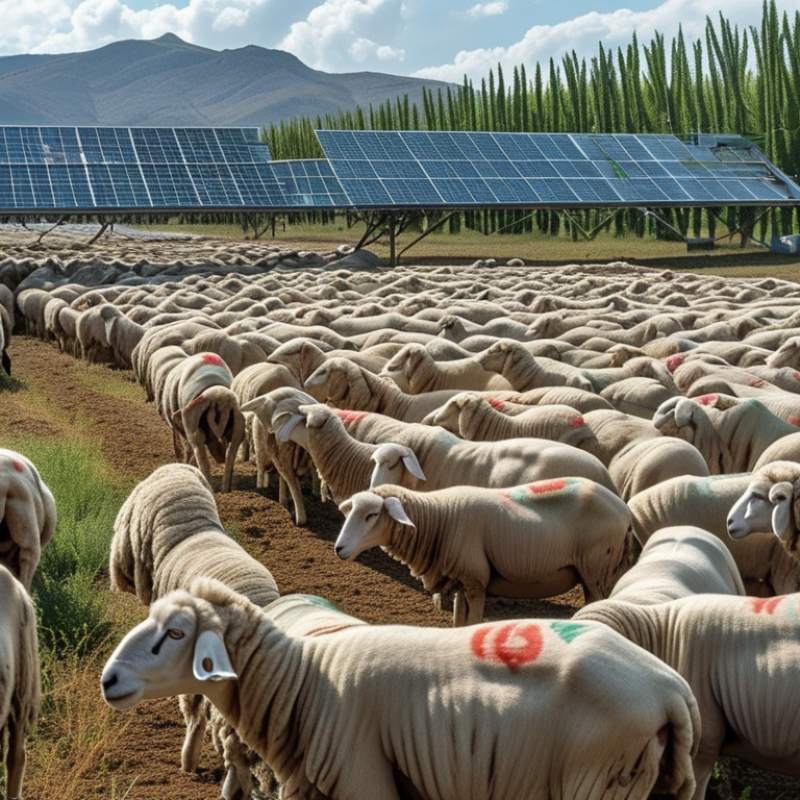
Combining sheep farming with solar energy creates a unique opportunity. Sheep can graze under solar panels, maximizing land use efficiently. This synergy offers benefits beyond just profits. Grazing sheep helps maintain landscape and reduces grass growth around panels. Clean energy production is achieved while supporting sustainable farming practices.
Farmers learn to navigate challenges. Managing sheep near equipment can be tricky. Some farmers report sheep chewing on wires accidentally, damaging installations. Proper fencing and regular monitoring are crucial to mitigate these issues. Understanding sheep behavior is vital for success. Farmers must maintain a balance between livestock needs and energy production integrity.
Investments in solar technology require careful planning. Initial setup costs can be high, leading to uncertainty. However, over time, energy savings can offset costs. Many farmers see improved profit margins as energy demands rise. Establishing a robust infrastructure can ensure both sheep and solar arrays thrive. With dedication and a willingness to adapt, this integrated approach can lead to a productive future in agriculture and energy.
When selecting ideal areas for sheep farming and solar installation, several factors must be considered. One key aspect is land suitability. Grazing land should ideally have good drainage and soil quality. According to a report by the International Renewable Energy Agency, land with high solar insolation can enhance energy production. Regions with 5-7 kWh/m²/day are optimal for solar panels. This ensures both sheep grazing and solar energy generation thrive together.
Another critical factor is climate. Sheep farming typically benefits from moderate climates. An area with temperatures around 20-25°C is ideal for sheep health. However, areas with extreme temperatures pose challenges. They may lead to higher mortality rates or lower wool quality. According to the Food and Agriculture Organization, effective climate adaptation strategies are vital for sustainable farming practices, especially when incorporating solar technology.
Incorporating sheep farming with solar installations also requires careful planning of space. Space allocated for grazing should not shade the solar panels too much. Reports suggest that maintaining a balance between livestock and energy production maximizes profitability. Finding this balance is essential, yet not always straightforward. Landowners must regularly evaluate their systems to improve efficiency and address potential conflicts between the two practices.
| Area | Average Sheep Density (sheep/acre) | Land Cost ($/acre) | Solar Installation Cost ($/MW) | Average Yearly Income from Sheep ($/acre) | Average Yearly Income from Solar ($/acre) | Combined Profit Potential ($/acre) |
|---|---|---|---|---|---|---|
| Region 1 | 5 | 2000 | 1000000 | 300 | 150 | 450 |
| Region 2 | 6 | 2500 | 950000 | 400 | 175 | 575 |
| Region 3 | 4 | 1500 | 1050000 | 250 | 120 | 370 |
| Region 4 | 7 | 2200 | 1100000 | 450 | 200 | 650 |
| Region 5 | 3 | 1800 | 1000000 | 200 | 100 | 300 |
Integrating solar mounts into sheep grazing areas offers a unique opportunity for farmers. The panels provide shade for sheep and reduce grass growth, which can optimize grazing conditions. This synergy helps maintain a healthier flock while promoting sustainable energy solutions. Grazing sheep can help manage vegetation underneath solar arrays, preventing overgrowth and fire hazards.
Placing solar mounts strategically is crucial. Select locations that allow efficient energy generation while ensuring sufficient space for sheep to roam. Regularly monitor the condition of both the sheep and vegetation. Sometimes, the solar panels may create uneven grazing patterns, leading to overgrazing in some areas. A rotational grazing approach can mitigate this issue, distributing grazing pressure more evenly.
Farmers should prioritize fencing around solar installations. This prevents sheep from accessing areas where they could damage the equipment. Additionally, keep a watchful eye on the sheep's health. Too much shade can reduce their vitamin D intake. Balancing these factors can lead to successful integration. Farmers can optimize profits while contributing to a greener future. However, careful planning is essential to avoid potential setbacks.
Combining sheep farming with solar panel installations offers substantial economic benefits. This innovative approach allows farmers to optimize land use, generating income from both wool and renewable energy. The sheep graze on land that also hosts solar panels, reducing maintenance costs for farmers. The dual-use strategy can maximize profit margins while promoting sustainable practices.
In rural areas, solar energy can lead to reduced electricity costs. Sheep farming provides additional revenue through wool and lamb production. Farmers can sell excess energy back to the grid, creating another income stream. Some may worry about the initial investment in solar technology. Yet, government incentives can ease this burden. Renewable energy financing options are more accessible now than ever.
However, it’s essential to consider potential downsides. There might be challenges in managing livestock around solar panels. Proper fencing and grazing management are crucial. Farmers may need to learn about new technologies. Balancing animal welfare with energy production requires thoughtful planning. Overall, while there are hurdles, the economic prospects make this combination a worthwhile consideration for those in agriculture.
Combining sheep farming with solar mounts presents unique opportunities and challenges. This dual land use can lead to increased profitability, but it's not without difficulties. For example, sheep need adequate shelter. Sun exposure is crucial for solar efficiency. Balancing these needs can be tricky.
Managing the health of sheep is challenging. They require more than just grazing space. Overcrowding can lead to disease. Additionally, equipment maintenance is vital. Solar panels must be regularly cleaned and inspected. If neglected, they can underperform. This approach isn't a perfect solution.
Environmental impacts must also be considered. Land alterations can disrupt local wildlife. Farmers need to monitor these changes closely. Exploring plant options that benefit both sheep and solar efficiency can help. Growing select grasses that thrive in shaded areas is a potential strategy. This mixed-use model requires ongoing effort and dedication.
: It maximizes land use efficiently while supporting clean energy production. Grazing sheep helps maintain the landscape and reduces grass growth.
Managing sheep near solar equipment can be tricky. Some sheep may chew on wires, damaging installations.
Proper fencing is crucial to prevent sheep from accessing sensitive areas. Regular monitoring is also important.
Choose locations that optimize energy generation and allow enough space for sheep to roam freely.
Implementing a rotational grazing approach can help distribute grazing pressure evenly across different areas.
Too much shade can limit vitamin D intake. Farmers must balance shade and sunlight exposure to maintain sheep health.
Neglected solar panels can underperform, reducing the efficiency of energy production. Regular cleaning and inspection are necessary.
Land alterations can disrupt local wildlife. Farmers should observe these changes and adapt their practices accordingly.
No, it is not. It requires continuous effort and flexibility to address challenges and optimize profits.
Considering plant options that benefit both, like growing shade-tolerant grasses, can enhance the productivity of this dual approach.
The article "How to Combine Sheep Farming with Solar Mounts for Profit?" explores the effective integration of sheep farming and solar energy production. It emphasizes the synergy between these two agricultural practices, highlighting ideal locations where solar installations can coexist with sheep grazing. Best practices for integrating solar mounts into grazing areas are discussed, ensuring that both sheep and solar panels thrive together.
The economic advantages of this dual land use are significant, as it allows farmers to generate renewable energy while improving pasture management for their flocks. Additionally, the article addresses potential challenges, such as land use conflicts and maintenance of solar equipment, providing practical solutions to optimize the operation. This approach not only enhances profitability but also promotes sustainability in agriculture.

Trike Solar