Choosing the right solar installation method is crucial for maximizing energy efficiency. Homeowners often face a key question: "What is the difference between ground mount and roof mount solar?" Both systems have their unique advantages and challenges.
Ground-mounted systems often provide flexibility in placement. They can capture sunlight more effectively, thanks to unshaded open spaces. However, they require more land and might be subject to zoning regulations. On the other hand, roof-mounted systems save ground space and utilize existing structures. They can be easier and less expensive to install, but roof angle and orientation can limit efficiency.
Consider your property's layout, climate, and energy goals. It's essential to reflect on personal needs and long-term implications. Consultation with a solar expert can provide tailored recommendations. Each option has potential downsides that need careful evaluation. Balancing cost, efficiency, and landscape will guide your decision-making process.
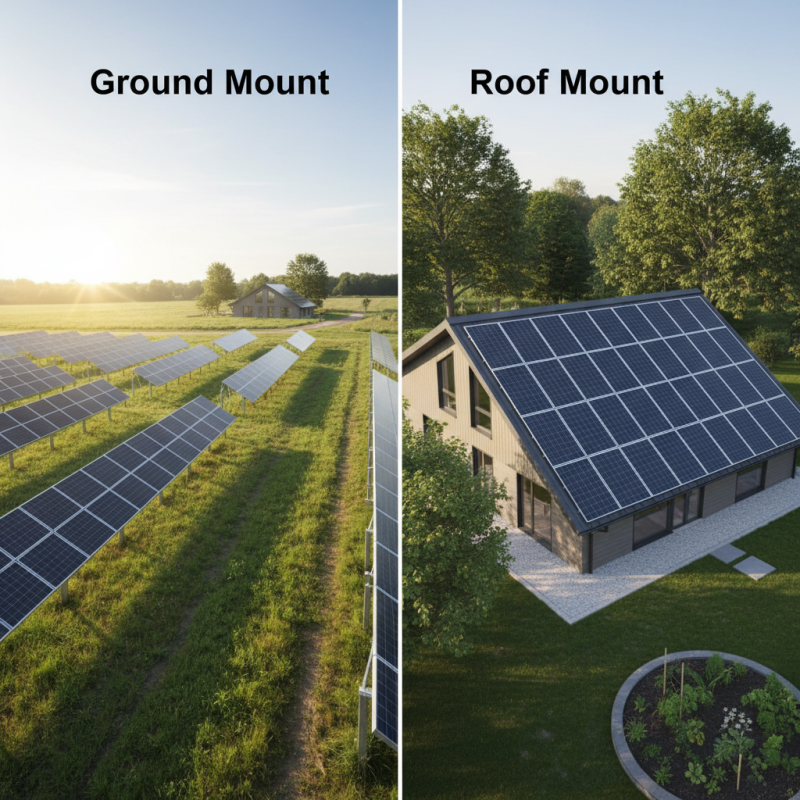
Factors Influencing the Decision Between Ground Mount and Roof Mount Solar
When deciding between ground mount and roof mount solar systems, several factors come into play. The available space is crucial. A roof mount system requires a suitable and structurally sound roof. If the roof is old or has limited space, ground mounting might be better. Ground mounts usually need more land area, which can be a constraint in urban settings.
Another important factor is energy production. Ground mounted systems can often be oriented and tilted for optimal sunlight capture. In contrast, roof mounts may have less flexibility. Factors like roof angle, shading from trees or buildings, and orientation significantly impact energy efficiency. Ground mounts can also maintain airflow, helping panels stay cooler, which enhances performance.
Budget considerations often influence the decision. Initial installation costs for ground mounts may be higher due to land preparation and installation. However, maintenance could be easier due to accessibility. It’s essential to evaluate personal preferences, energy needs, and long-term savings. Some homeowners may feel overwhelmed by these choices, leading to indecision. Understanding these factors deeply can guide a more informed decision.
Cost Analysis: Upfront Investments and Long-Term Savings in Solar Installations
Choosing between ground mount and roof mount solar installations involves careful consideration of costs. An upfront investment in solar panels can appear daunting. However, it is essential to balance immediate expenses with potential long-term savings. Ground-mounted systems often require additional land preparation and permits, increasing initial costs. In contrast, roof-mounted systems typically involve lower installation costs, assuming the roof is suitable and in good condition.
Long-term savings also vary significantly between the two options. Ground mounts can provide more flexibility for panel orientation, maximizing energy output. Over time, this can lead to greater savings on utility bills. Conversely, roof-mounted systems may generate less energy in some cases, which can affect savings over years. It's vital to evaluate your site’s unique characteristics and energy needs carefully.
Maintenance should also be factored into cost analyses. Ground-mounted systems can be easier to access for repairs, whereas roof mounts might involve more complex maintenance due to their locations. This can impact future costs and overall reliability. Reflecting on these details ensures a well-informed decision that aligns with both budget and energy goals.
2026 How to Choose Between Ground Mount and Roof Mount Solar? - Cost Analysis: Upfront Investments and Long-Term Savings in Solar Installations
| Installation Type |
Upfront Cost (USD) |
Average Annual Savings (USD) |
Payback Period (Years) |
Lifespan (Years) |
| Ground Mount |
$15,000 |
$1,500 |
10 |
25 |
| Roof Mount |
$12,000 |
$1,200 |
10 |
25 |
| Hybrid System |
$18,000 |
$1,800 |
10 |
30 |
Space Considerations: Evaluating Available Area for Ground vs. Roof Systems
When considering solar systems, space often determines the best installation type. Ground-mounted systems need ample land. Ensure that the area is free from obstructions like trees and buildings. According to the National Renewable Energy Laboratory (NREL), ground mounts can generate up to 30% more energy than rooftop systems. However, they require more space and appropriate land conditions.
Rooftop systems increase energy production without using extra land. They often capitalize on underutilized areas of buildings. A report from the Solar Energy Industries Association (SEIA) indicated that urban rooftops can host over 80% of solar potential in metropolitan areas. Yet, they depend on roof condition and angle. Some roofs may not support solar panels without significant modifications.
Choosing between ground and roof mounts means evaluating your site carefully. Consider sunlight exposure and utility connections. Each option has pros and cons that may affect energy efficiency and cost. Reflect on your property’s unique features to make an informed decision. These nuances can greatly influence installation success.
Comparison of Ground Mount vs. Roof Mount Solar Systems Based on Space Considerations
Efficiency Metrics: Comparing Energy Output of Ground and Roof Mounted Solar
When considering solar installation, efficiency is a critical factor. Ground-mounted systems typically offer greater energy output potential compared to roof-mounted options. According to the National Renewable Energy Laboratory (NREL), ground mounts can achieve up to 30% more energy generation due to their optimal positioning and unobstructed sunlight exposure. This makes them an attractive option for those with sufficient land.
However, roof-mounted systems have their own advantages. They utilize existing structures, thus saving space and installation costs. In densely populated areas, roof mounts might be the only viable option. A study by Solar Energy Technologies Office (SETO) indicates that roof-mounted systems can still provide excellent efficiency, often averaging around 15-20% output compared to ideal conditions for ground mounts.
It's essential to weigh these factors carefully. Ground-mounted systems can require significant land area, which may not be practical for every project. Each setting presents its own unique challenges and opportunities. A careful evaluation of energy needs, space availability, and local regulations will guide the best choice for optimal energy yield.
Regulatory and Zoning Implications for Ground and Roof Solar Installations
When considering solar installation, regulating factors vary significantly between
ground-mounted and roof-mounted systems.
Ground mounts often require additional permits. You might need a land survey, especially if your property has zoning restrictions.
These processes can be time-consuming and may delay installation. It's essential to check local zoning laws before proceeding.
On the other hand, roof-mounted systems usually involve fewer regulatory hurdles. However, they are subject to building codes.
Some homeowners associations (HOAs) may impose restrictions. It’s crucial to review these guidelines early.
Also, securing the necessary structural assessments is vital. A roof not built for the extra weight could lead to
safety concerns later.
Navigating these regulations can be daunting. Even experienced installers face challenges. It's wise to consult local authorities
or a qualified professional. They can provide essential insights about your specific area.
Understanding the implications of each option can save you
headaches down the road.
Conclusion
When deciding between ground mount and roof mount solar installations, several factors come into play. Key considerations include cost analysis, where upfront investments and long-term savings are evaluated, as well as space availability to determine the feasibility of each option. Efficiency metrics are also crucial, as they compare the energy output of the respective systems, helping homeowners choose the most effective solution for their energy needs.
"What is the difference between ground mount and roof mount solar" often comes down to these factors among others. Additionally, regulatory and zoning implications need to be addressed, as local laws may influence the suitability of each installation type. By weighing these elements carefully, individuals can make informed choices that align with their property, budget, and energy goals.

 Trike Solar