How Does Solar Farming Affect Soil Quality in 2026?

Time:2026-09-20 Author:Mason
0%

How does solar farming affect soil quality in agricultural mounts? In 2026, this question matters as farms combine food production with renewable energy. Solar panels can reduce direct sunlight, wind exposure, and evaporation beneath their structures. That shade may preserve soil moisture during hot periods. It can also support grasses, legumes, and pollinator plants.

The U.S. Department of Energy’s InSPIRE research highlights agrivoltaic systems as valuable testing grounds for land, water, and energy management. Recent NREL field assessments also emphasize site-specific monitoring rather than universal claims. Soil texture, panel height, drainage, grazing practices, and construction methods can change outcomes. Fraunhofer ISE’s agrivoltaics research similarly reports that agricultural production can continue beneath selected photovoltaic layouts. However, construction traffic may compact soil, disturb topsoil, and create drainage problems. The benefits are not automatic.

Dr. Greg Barron-Gafford, an agrivoltaics researcher at the University of Arizona, has described the approach simply: “Agrivoltaics is a way to make the land do double duty.” That idea is powerful, but incomplete. Soil quality includes organic matter, infiltration, biological activity, and long-term structure. A shaded field may look greener while losing productivity in poorly managed areas. Conversely, carefully designed mounts can protect soil from heat and heavy rainfall. The evidence remains uneven across climates and crops. Farmers need repeated soil tests, not attractive photographs. In 2026, responsible solar farming should measure changes before, during, and after installation. It should also admit uncertainty.
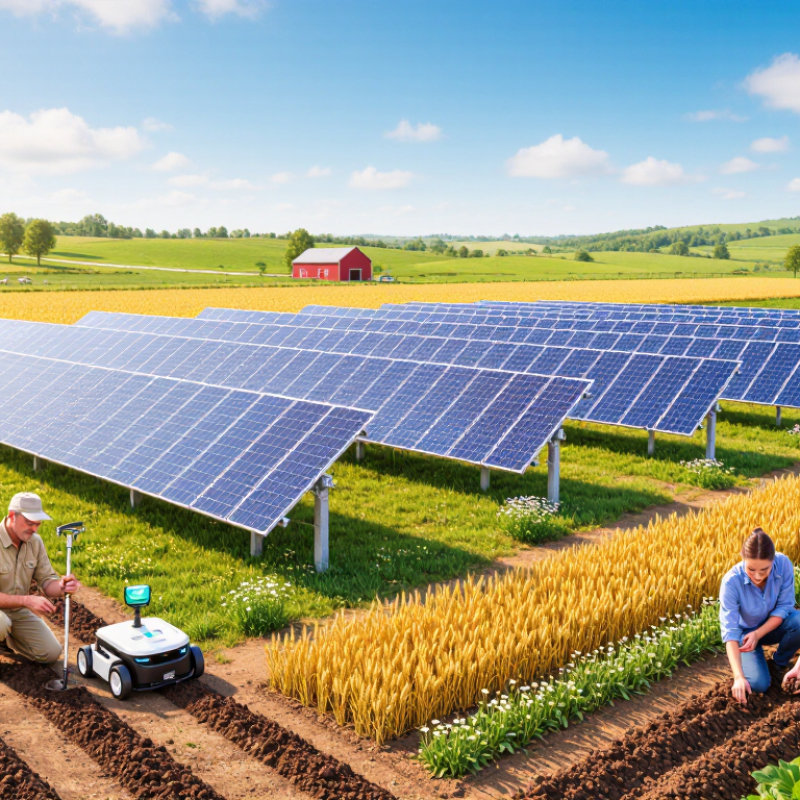
How Does Solar Farming Affect Soil Quality in 2026?

What Solar Farming Means for Soil Quality in 2026

In 2026, solar farming means managing energy production without treating soil as an afterthought. Panels can reduce wind exposure and intense rainfall on covered ground. This may lower erosion and help retain moisture during dry periods. However, construction vehicles can compact soil, especially near access roads and panel foundations. Shaded areas may stay cooler and wetter, while uncovered strips can dry quickly. These differences influence earthworms, roots, nutrients, and microbial activity. Results vary by soil type, rainfall, panel height, and vegetation management. The evidence is not perfectly uniform.

Tips: Test soil before construction, then repeat testing every one or two years. Measure organic matter, pH, bulk density, infiltration, and plant cover. Keep heavy traffic on defined routes. Use deep-rooted native vegetation where suitable. Mow carefully and avoid leaving bare soil after maintenance. Small changes matter.

A responsible solar site should include drainage checks after heavy storms. Look for muddy channels, exposed roots, or water pooling beneath panels. These details reveal problems that laboratory results may miss. Vegetation can improve soil structure, but poor maintenance can create competing weeds or dry patches. Grazing may reduce mowing needs, yet animals can compact wet ground. That trade-off deserves local review. In my view, soil quality should be monitored as carefully as electricity output. Still, long-term studies across different climates remain limited, so every site should question its own assumptions.

How Solar Panels Change Soil Structure and Moisture

How Does Solar Farming Affect Soil Quality in 2026?

Solar panels change soil structure and moisture by reshaping shade, rainfall, and farm traffic. Panels block direct sunlight, lowering surface temperatures beneath them. This can slow evaporation and keep soil damp for longer periods. However, dry strips may form between panel rows.

Rainwater often runs from panel edges into narrow drainage lines. These areas can become muddy, compacted, or eroded after heavy storms. Construction vehicles may press soil deeply, reducing pore spaces and limiting root growth. Field observations and soil tests show that recovery depends on soil type, vegetation, and maintenance. The evidence is not perfectly uniform. Clay soils usually respond differently from sandy soils.

Tips: Test bulk density, infiltration, moisture, and organic matter each season. Keep heavy machinery on fixed paths. Maintain living ground cover under and around the panels. Check for bare patches after intense rain. Avoid assuming shaded soil is always healthier. In one field, moisture improved beneath panels, yet earthworm activity declined where vegetation stayed thin. That result needs reflection, not a simple claim. Small design changes, such as wider row spacing and better drainage, may protect soil structure over time.

Effects of Solar Farms on Soil Chemistry and Nutrients

Solar farms can change soil chemistry without adding chemicals. Their strongest influence often comes from shade, altered rainfall, and vegetation management. Under panels, cooler soil may lose water more slowly. This can reduce nutrient movement during dry months. Yet panel edges may receive concentrated runoff. Small channels can carry nitrate and fine particles away. Soil does not respond evenly. Not always.

A reliable assessment starts before construction. Soil scientists should record pH, electrical conductivity, organic matter, and available nitrogen, phosphorus, and potassium. Samples from 0–15 centimeters provide a useful surface baseline. Deeper samples can reveal compaction or displaced subsoil. After installation, paired samples from shaded rows and open reference plots improve interpretation. Testing after heavy rain also matters. One dry season can mislead.

Vegetated ground beneath panels may slowly increase carbon inputs, especially where roots remain undisturbed. Legumes can add nitrogen, but excessive growth may change nutrient balances or require mowing. The chemistry shifts. Construction traffic is a harder problem. Compacted soil restricts oxygen, roots, and water infiltration, even when laboratory results look normal. In practice, results are mixed. Some sites improve; others recover slowly. Honest records should include failed patches, not only healthy vegetation.

Impacts on Soil Biology, Erosion, and Water Movement

How Does Solar Farming Affect Soil Quality in 2026?

Solar farming can improve soil biology when vegetation remains beneath and between the panels. Shade lowers surface temperatures during hot afternoons. It can also reduce moisture loss from exposed soil. Plant roots feed fungi, bacteria, and earthworms. These organisms help create stable soil structure. The results are not automatic. Heavy machinery may compact access lanes and disturb fragile soil layers. Field monitoring should measure organic matter, earthworm activity, microbial respiration, and bulk density over several seasons.

Erosion often decreases when solar sites maintain continuous grass or native ground cover. Leaves soften rainfall impact. Roots hold particles in place. However, construction can leave bare strips that wash out during intense storms. Panel edges may concentrate rainfall into narrow channels. Small rills can appear below drip lines. Proper grading, mulch, and vegetated drainage paths reduce this risk. The picture is not tidy. A site can control wind erosion while still developing water erosion after a cloudburst.

Solar panels also change how water moves across the ground. Shaded areas may stay damp longer, while spaces beyond panel edges can dry faster. Soil texture, slope, panel height, and rainfall patterns all matter. Sensors placed at several depths can reveal these differences better than visual inspection. Some early findings remain mixed, especially where maintenance traffic is frequent. I would not treat every solar field as soil restoration. Long-term sampling is still needed. Poor planning can quietly reverse the benefits.

Ways to Monitor and Improve Soil Quality on Solar Farms

Solar farming can protect soil, but only with disciplined monitoring. NREL’s 2022 land-use review estimates that utility-scale solar commonly occupies 5–10 acres per megawatt. Small mistakes can therefore spread across large areas. Before construction, record soil texture, organic carbon, pH, electrical conductivity, bulk density, and infiltration rates. Use fixed sampling points beneath panels, between rows, and near access roads. Repeat measurements annually, especially after heavy rain or machinery use.

Vegetation is a practical soil-quality signal. Measure plant cover with simple quadrats and photograph the same locations each season. Bare patches, rills, ponding, and crusted surfaces often reveal trouble before laboratory results do. USDA NRCS soil-health guidance emphasizes minimizing disturbance, maintaining living roots, and keeping soil covered. Mowed grass is not always enough. Native, low-growing mixtures may reduce erosion and support infiltration, though poorly chosen species can compete with crops or require excessive irrigation. That trade-off deserves honest review.

Tips: Keep vehicles on designated routes. Test compaction beside roads and under panel edges. Check infiltration after storms, not only during dry weather. Use grazing carefully, because concentrated animals can damage wet soil. Compare results with the baseline, and document failures as clearly as improvements. Some monitoring plans look impressive but miss seasonal changes. A simple, consistent record is often more useful.

FAQS

How can solar panels change soil moisture?

Panels shade the ground and reduce direct sunlight. Soil beneath them may stay damp longer. Areas between rows can dry faster. The pattern depends on rainfall, slope, and soil texture.

Can shaded soil become healthier?

Not always. Shade may reduce evaporation, but thin vegetation can limit earthworm activity. A damp surface does not prove better soil health. This deserves careful checking.

How does panel runoff affect erosion?

Rainwater can flow from panel edges into narrow channels. Heavy storms may create muddy rills below drip lines. Mulch, grading, and planted drainage paths can reduce these problems.

Does solar farming improve soil biology?

It can, when living plants cover the soil. Roots support fungi, bacteria, and earthworms. Construction traffic may compact access lanes and disturb deeper soil layers. Benefits are possible, not automatic.

Which soil measurements should be collected?

Test bulk density, infiltration, moisture, and organic matter each season. Monitor earthworms and microbial respiration too. Compare shaded areas, row spaces, and traffic lanes.

Why does soil type matter?

Clay and sandy soils respond differently to shade and rainfall. Clay may drain slowly after storms. Sandy soil may lose moisture more quickly. One management plan may not fit both.

How can machinery protect soil structure?

Keep heavy vehicles on fixed paths. Avoid repeated travel across planting areas. Wet soil is especially vulnerable to deep compaction. Recovery may take several seasons.

Can vegetation reduce erosion around panels?

Continuous grass or native ground cover softens rainfall impact. Roots hold soil particles in place. Bare strips can still wash out after intense rain. Check them after every major storm.

How should water movement be monitored?

Place moisture sensors at several soil depths. Inspect panel edges, row centers, and lower slopes. Visual checks alone can miss drying or buried compaction. Long-term records are better.

Can solar fields restore soil automatically?

No. Poor drainage, bare ground, and frequent traffic can reverse improvements. Wider row spacing may help. The evidence remains mixed, so regular reflection is necessary.

Conclusion

Solar farming can influence soil quality in both beneficial and challenging ways in 2026. By covering portions of farmland with elevated panels, solar installations alter sunlight, wind exposure, temperature, and rainfall distribution. These changes may reduce evaporation, protect soil from intense weather, and support moisture retention, but concentrated runoff and repeated vehicle movement can also cause compaction, uneven drainage, or changes in soil structure. Understanding how does solar farming affect soil quality in agricultural mounts is therefore important when planning and managing these sites.

The effects also extend to soil chemistry and biology. Shaded conditions may influence nutrient cycling, plant growth, microbial activity, and organic matter levels, while vegetation management can help prevent erosion and improve water infiltration. Regular testing of pH, nutrients, moisture, compaction, and biological activity can reveal emerging problems. Maintaining ground cover, limiting unnecessary disturbance, directing water safely, and using site-appropriate vegetation can help preserve soil health. With careful monitoring and adaptive management, solar farms can produce energy while supporting long-term agricultural soil quality.

Mason

Mason

Mason is a seasoned marketing professional with a deep expertise in the company's offerings and a passion for driving brand awareness. With a strong background in digital marketing strategies, he has an innate ability to connect with diverse audiences and effectively communicate product benefits.......