Birds often choose the narrow space beneath roof solar panels because it feels protected, warm, and difficult for predators to reach. Twigs, feathers, droppings, and nesting material can quickly collect against cables and mounting rails. This debris may block airflow, stain the roof, attract insects, and create avoidable maintenance problems. The real question is not only how to remove a nest, but how to prevent the space from becoming attractive again.
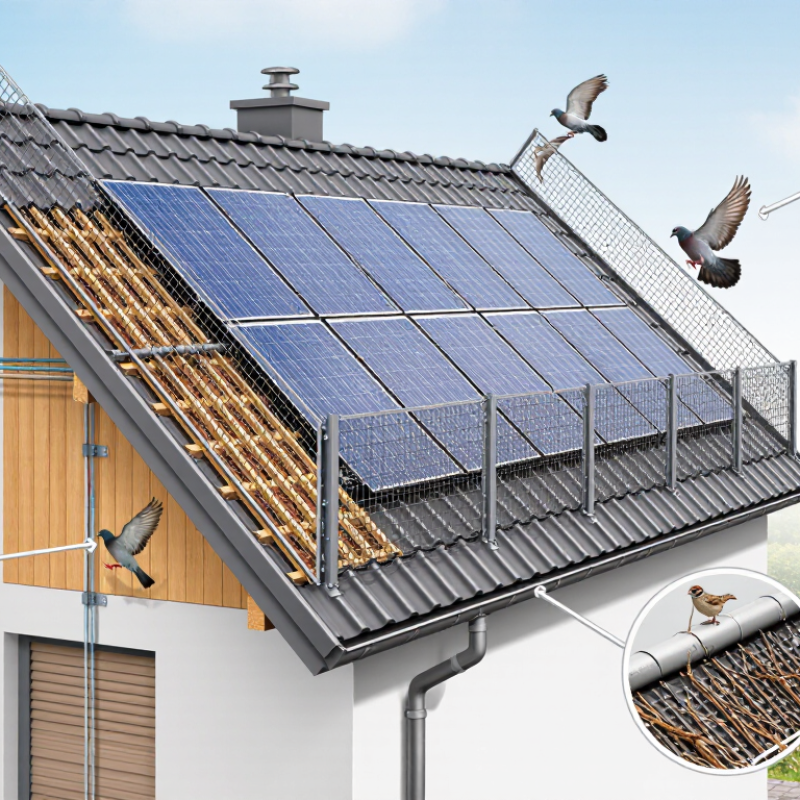
Bird-control consultant John W. Smith explains, “Effective bird prevention begins by securing the gaps birds use, not by chasing birds away repeatedly.” That principle supports a practical approach to How to prevent birds from nesting under roof solar panels. A qualified installer should inspect the panel perimeter, roof condition, cable routes, and existing wildlife activity. Galvanized mesh or purpose-built solar-panel exclusion systems can close entry points while preserving ventilation and drainage. Do not seal active nests without checking local wildlife requirements. Timing matters.
Small details matter.
For example, a loose mesh edge can become another nesting entrance after strong wind. Uneven tiles may also leave hidden gaps that are easy to miss from the ground. Regular inspection helps, although it is not a perfect solution. Birds may test new barriers, and poorly fitted products can damage roofing materials. A reliable plan combines careful installation, humane exclusion, periodic checks, and prompt repairs. The best method depends on the roof design, bird species, and nesting history.
Inspect Roof Panels to Locate Nesting Sites and Entry Gaps
Birds often nest beneath roof panels because the space is dark, dry, and protected from wind. The best prevention starts with a careful inspection, not immediate sealing. Examine the roof from the ground, then inspect accessible areas with a stable ladder. Look for feathers, droppings, loose nesting material, or repeated bird activity around panel edges.
Pay close attention to overlaps, eaves, ridge caps, flashing, and damaged fasteners. Small gaps can be surprisingly attractive nesting entrances. Use a torch to check shadowed spaces, but never put your hand inside an unseen cavity. An occupied nest may contain eggs or chicks, so do not block the opening until the site is clearly inactive. Local wildlife guidance may also apply. When access is unsafe or the roof is badly damaged, a qualified roofing or wildlife professional is the safer choice.
Tips: Inspect during quiet morning hours, when bird movement is easier to observe. Photograph gaps before making repairs. Replace damaged seals and secure loose panels only after confirming the cavity is empty. Mesh barriers can help, but they must be fitted tightly without sharp exposed edges. Avoid relying on noise or visual repellents alone; birds often ignore them after a short time. One mistake is sealing the most obvious gap while missing a second entrance nearby. A slower inspection usually prevents that problem.
Check Nest Status and Follow Local Wildlife Protection Rules
Before blocking any roof gap, check whether the nest is active. Look for eggs, chicks, fresh nesting material, or regular bird movement. A quiet roof panel can still hide a nest.
Do not remove an active nest yourself. Local wildlife rules may protect nesting birds, eggs, or young birds, even on private property. Contact your local wildlife authority or a qualified wildlife professional for advice. They can explain permitted timing, inspection methods, and safe alternatives. Take clear photographs from the ground when possible. Avoid touching the roof, nest, or surrounding materials.
If the nest is empty, confirm this carefully over several observation periods. Birds may leave temporarily to feed. I once underestimated how quickly a quiet nest could become occupied again. That mistake changed the repair schedule.
After approval, use humane prevention methods, such as repairing loose panels and sealing gaps outside the protected nesting season. Keep ventilation openings clear. Never use toxic substances, glue traps, or methods that could injure birds. A professional can install barriers without trapping wildlife inside. Check the area again after repairs, especially after rain or strong winds. Local guidance can change, so written confirmation is worth requesting.
Typical incubation periods (days)
Incubation lengths vary by species and source. An active nest may be protected by local wildlife laws, so check the nest status and local rules before working under roof panels. If you are unsure whether a nest is active or which species it belongs to, contact a local wildlife authority.
Wait Until Young Birds Have Left Before Blocking Access
If birds are nesting beneath roof panels, wait until the young have left before sealing any gaps. Watch the entrance from a distance at different times of day. Adults may make quick feeding visits, even when the nest seems quiet. Listen for faint chirping, too. A silent afternoon is not proof that the nest is empty.
It is easy to mistake quiet for vacant. Look for repeated adult visits, fresh droppings, or movement beneath the panel, and keep observing for several days after activity appears to stop. If you are unsure, ask a qualified wildlife professional to assess the nest without disturbing it. Once you are confident the birds have gone, remove leftover material only if it is safe to reach, then close the access point with a durable barrier. Check nearby gaps as well, but keep roof ventilation and drainage clear. A rushed repair can trap a bird inside, so take time to inspect the space before fitting anything. I would rather wait an extra week than guess wrong.
What Is the Best Way to Stop Birds Nesting Under Roof Panels? — Wait Until Young Birds Have Left Before Blocking Access
| Stage or Situation |
What to Look For |
Recommended Action |
Important Caution |
| Possible nesting activity |
Birds repeatedly enter a gap beneath roof panels, carry nesting material, or visit a particular opening. |
Observe from a distance and identify the access point. Avoid handling the nest or blocking the opening while activity may be ongoing. |
Birds and nest protections differ by species and location. Check local wildlife rules if you are unsure what species is present. |
| Active nest with eggs or young |
Adults are regularly bringing food, eggs or nestlings are visible, or young birds are calling from the nest. |
Leave the nest undisturbed and keep people and pets away from the area. Seek advice from a qualified local wildlife professional if the nest creates an urgent safety concern. |
Do not seal, remove, spray, or otherwise disturb an active nest. In many places, active nests are legally protected. |
| Waiting for the young to leave |
Young birds may be close to fledging, but adults still visit or young remain in the nest. |
Continue observing from a distance. Do not rely on a fixed number of days; nesting periods vary by species and circumstances. |
A quiet nest does not by itself prove that it is empty. If uncertain, ask a local wildlife authority or qualified professional to assess it. |
| Confirming the nest is inactive |
No birds are seen entering or leaving over repeated observations, and no young remain in the nest. |
Confirm that the nest is no longer occupied before arranging exclusion. If there is any doubt, obtain expert advice rather than closing the gap. |
Do not trap birds inside roof spaces or beneath panels. |
| Preventing future nesting |
The nest is confirmed inactive and the access point can be reached safely. |
Have the opening securely closed with durable, suitable materials, such as properly fitted mesh or flashing, while preserving necessary roof ventilation and drainage. |
Use a qualified roofing or wildlife-exclusion professional for difficult access or roof work. Do not block vents or create water-trapping gaps. |
| After exclusion |
Panels and openings have been repaired or screened. |
Inspect the repair periodically and keep the area clear of loose nesting material where it can be safely removed. |
If birds are still using the gap, stop work and reassess before making further changes. |
Install Bird-Proof Barriers Without Trapping Birds Inside
Birds often enter the narrow spaces beneath roof panels, where warmth and shelter are available. A durable fix begins with a careful inspection. Look for loose edges, nesting material, feathers, droppings, and daylight beneath the panels. Before closing any opening, confirm that no birds, eggs, or chicks remain inside. Active nests should never be sealed in place. Contact a qualified wildlife professional when the situation is unclear. Timing matters.
Use a corrosion-resistant mesh barrier that follows the panel’s profile. Cut it neatly, then secure it with suitable screws and washers. The mesh should block entry without crushing the roof edge or restricting drainage. Overlap adjoining sections so small birds cannot push through a seam. Avoid relying on expanding foam alone. It can deteriorate, leave gaps, and complicate future repairs. A rigid edge trim usually provides better long-term protection.
Check the barrier from ground level, then inspect it closely with a ladder. Wear appropriate protective equipment around droppings and nesting debris. Pay attention to corners, vents, and uneven fascia boards. Even careful work can miss a gap smaller than a thumb. I have learned that rushed measurements create repeat problems. Recheck the roof after heavy rain and strong wind. If birds still gather nearby, the barrier may need adjustment rather than immediate removal.
Monitor the Roof and Maintain Barriers to Prevent Re-Nesting
Regular monitoring matters more than a single repair. Walk the roofline from the ground each week during nesting season. Look for feathers, droppings, scratching sounds, and daylight beneath panel edges. Use binoculars where access is difficult. Small signs matter. After strong wind, inspect loose flashing, displaced panels, and damaged mesh. These gaps can reopen quickly, even after careful work.
Do not block an occupied nest. Local wildlife rules may protect active nests, so confirm the correct timing before disturbing any birds. Once the area is clear, remove nesting material carefully and clean nearby debris. Then install a corrosion-resistant mesh barrier along every opening. Secure it tightly against the panel and roof surface. A gap of only a few centimeters may invite another bird inside.
I have seen repairs fail because installers covered the obvious entrance and ignored the panel’s far end. Check corners, overlaps, vents, and drainage channels. Press gently against the mesh to find weak points. It should not flex enough for a bird to push through. Recheck the barrier after one week, then monthly. I used to treat maintenance as a final step. That was a mistake. Seasonal inspections are part of the repair, not an optional extra. When access is steep or unstable, use a qualified roofing or wildlife professional instead of taking unnecessary risks.
FAQS
The space is dark, dry, and protected from wind. Small gaps near overlaps can become useful entrances.
Look for feathers, droppings, loose nesting material, eggs, or chicks. Repeated bird activity near panel edges is also important.
Start from the ground. Use a stable ladder only in accessible areas, and use a torch for dark spaces. Never reach into an unseen cavity.
Do not seal it while the nest may be active. Birds might leave temporarily, so observe the area during several quiet periods.
Avoid touching the nest or roof materials. Contact a local wildlife authority or qualified professional for lawful, humane guidance.
Not usually. Birds may ignore them after a short time. Physical repairs are generally more dependable.
Confirm the cavity is empty, then replace damaged seals and secure loose panels. Fit mesh tightly, without sharp exposed edges.
Sealing one obvious gap while missing another entrance is common. A quiet inspection helps. I once underestimated a supposedly empty nest.
Conclusion
To stop birds nesting under roof panels, begin by inspecting the roof carefully to identify nesting activity, gaps, and other access points. Check whether a nest is active and whether eggs or young birds are present. Follow local wildlife guidance, and avoid disturbing an occupied nest. If birds are still raising young, wait until they have safely left before closing any openings.
Once the area is clear, install sturdy bird-proof barriers around panel edges and gaps, taking care not to trap birds inside. Secure the barriers so they do not damage the roof or interfere with panel ventilation. How to prevent birds from nesting under roof solar panels also depends on regular follow-up: monitor the roof for new activity, check that barriers remain firmly in place, and repair any openings promptly to discourage re-nesting.

 Trike Solar