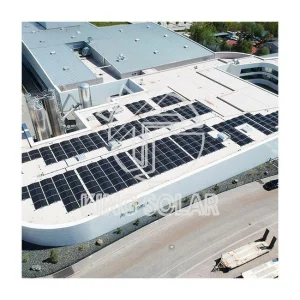
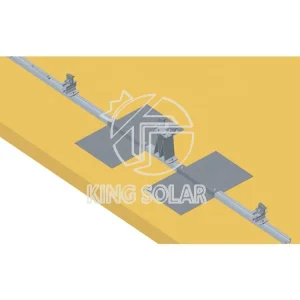
Solar Flat Roof Ballast Mount Manufacturer & Supplier in the Hai Phong Market

Engineered for extreme coastal wind loads, high-salinity corrosion resistance, and fast non-penetrative installations in Northern Vietnam's leading industrial zones.

Get Structural Engineering Quote

Featured Hai Phong Industrial Ballasted Solar Mounts

Non-penetrative concrete ballast roof mount configurations ideal for factories and warehouses within VSIP Hai Phong and DEEP C Industrial Zones.
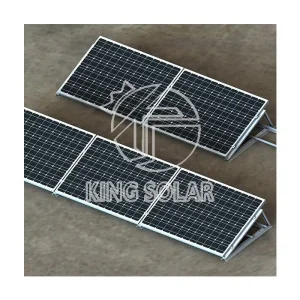
Solar Flat Roof Ballast Mount Hai Phong

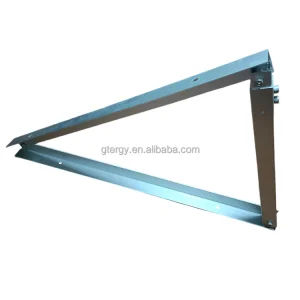
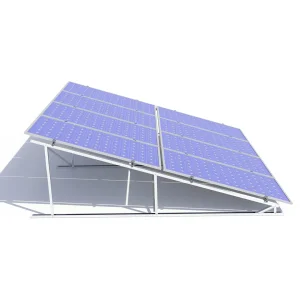
Hai Phong Series: Triangle Solar Panel Ballast Mount for Concrete Flat Roof

View Product Details
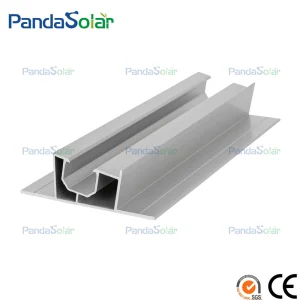
Flat Roof Solar Racking Hai Phong

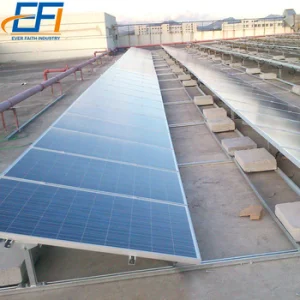
Coastal Grade: Flat Roof Solar Ballasted Bracket System & Triangle Mounts

View Product Details
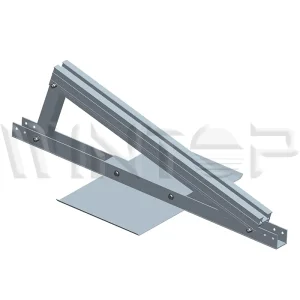
Triangle PV Mount Hai Phong

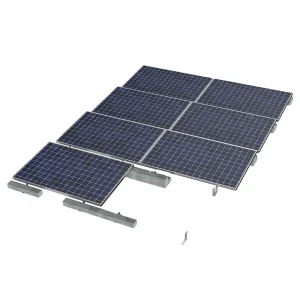
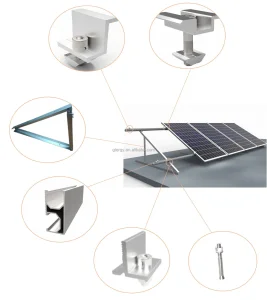
Heavy-Duty Triangle Ballast Solar PV Mount for Flat Roof Installations

View Product Details
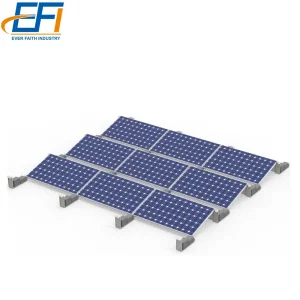
PV Support Ballast Hai Phong

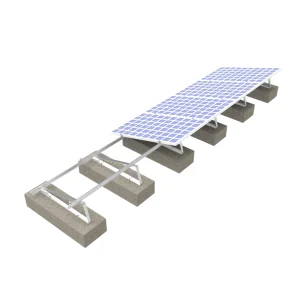
Industrial-Strength PV Flat Roof Solar Mounting Support with Heavy Ballast

View Product Details
Send Inquiry Now

Industrial Growth & Rooftop Solar Adoption in Hai Phong

Hai Phong, Northern Vietnam's primary port city and manufacturing powerhouse, has transformed into a critical node in the global electronics, automotive, and logistics supply chains. With major developments in industrial hubs such as DEEP C, Nomura, and VSIP Hai Phong, commercial and industrial (C&I) enterprises are scaling up investments in clean energy. Large-span flat concrete rooftops represent the predominant architectural layout for modern warehouses, electronics manufacturing assembly lines, and heavy industrial facilities.

However, the geographical location of Hai Phong in the Gulf of Tonkin introduces complex meteorological challenges. The city regularly experiences seasonal typhoons, violent summer storms, and high wind pressures alongside a highly saline marine environment. For factory operators, safeguarding building integrity is the top priority; drilling or penetrating concrete flat roofs to anchor solar installations leads to moisture ingress, structural decay, and the nullification of structural waterproofing warranties.

Key Meteorological Data for Solar Mounting in Hai Phong

  • Design Wind Speeds: Up to 180 km/h (Class II & III exposure categories for typhoons)
  • Corrosivity Level: C4 to C5-M (Marine Atmosphere environment requiring heavy anodization)
  • Typical Roof Layouts: Reinforce concrete flat slabs, pitch angles between 5° to 15°
  • Anchor Requirements: 100% non-penetrative aerodynamic ballast blocks to prevent water leakage.

Our solar flat roof ballast mount systems are custom-engineered to bridge the gap between fast installation and extreme safety. By leveraging aerodynamics, self-weight, and high-friction anti-slip pads, our mount structures secure solar modules without compromising the underlying building envelope. This structural integrity guarantees that logistics centers and industrial plants can meet their green energy quotas (Net-Zero by 2050 directives in Vietnam) risk-free.

Why Global Developers Source from Trike Solar (China Factory)

Combining Xiamen's top-tier supply chain cluster with advanced automation, engineered safety, and streamlined ocean logistics straight to Hai Phong Port.

Advanced CNC Manufacturing

Our 2,000+ sqm production facility utilizes automatic aluminum profile cutters, heavy laser cutting, high-speed stamping, and advanced block machines to ensure raw materials are processed to tight tolerances (within ±0.5mm).

Engineered Coastal Safety

Every structural profile is made of premium AL6005-T5 aluminum alloy, boasting anodization thicknesses exceeding 12-15 microns (up to 20μm upon request), coupled with SUS304 steel fasteners to combat marine atmosphere corrosion.

Direct Logistics to Hai Phong Port

Located in Xiamen, China, we offer unparalleled shipping speed. Shipments to Hai Phong Port (Chùa Vẽ, Đình Vũ, or Lạch Huyện) take only 3 to 5 days, reducing lead times for project EPCs compared to domestic local fabricators.

Xiamen Trike Solar Co., Ltd.

Xiamen Trike Solar Co., Ltd. is a leading high-tech enterprise based in Xiamen, China, specializing in the development, manufacturing, and sales of solar energy solutions. Committed to the mission of "Protecting the Ecological Environment and Building a Renewable Future," we strive to offer efficient, cost-effective, and easy-to-install solar products and services to customers worldwide.

With a team of highly experienced engineers, many with over 10 years of expertise in the renewable energy industry, Trike Solar is dedicated to providing tailored solar mounting systems for residential, commercial, and industrial applications. We ensure the highest levels of performance, reliability, and durability in every product. Our solutions help clients achieve energy independence and reduce long-term operating costs, while contributing to a greener planet.
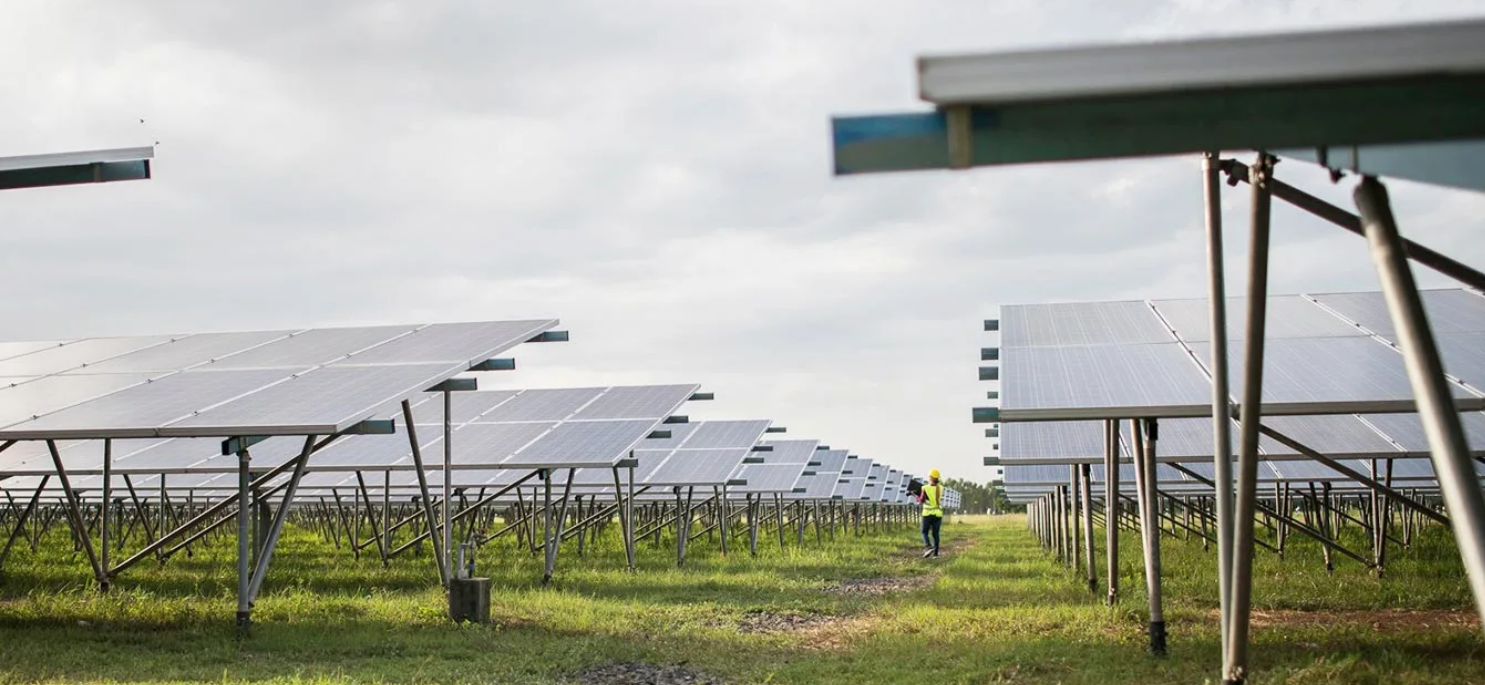
Trike Solar Manufacturing Facility
10+
Years Engineering Expertise
2,000+
Factory Sqm Area
100+
Countries Deployed
25+
Year Structure Warranty

Macro Technical Solutions & Procurement Guidelines

Standardizing structural ballast designs to comply with global engineering standards, international wind tunnels, and factory owner requirements.

1. Non-Penetrative Aerodynamic Design Philosophy

Our flat roof mounting structures utilize optimized tilt angles (normally 5°, 10°, or 15°) to minimize drag coefficients. By integrating wind deflectors (back plates and side plates), we create a downforce effect when wind passes over the array. This downward aerodynamic pressure reduces the total dead weight of concrete blocks required, preserving the roof's structural load limit (which is typically constrained to 15-25 kg/m² extra load in older industrial structures in Hai Phong).

2. Structural Compliance and Wind Tunnel Testing

For international EPC contractors bidding on major manufacturing plants (like Pegatron or VinFast facilities), compliance with international structural codes is non-negotiable. Trike Solar's ballasted systems are calculated using wind load models from AS/NZS 1170.2, ASCE 7-16, and Eurocode 1. Upon request, we provide detailed finite element analysis (FEA) reports alongside data matching physical Wind Tunnel Testing (CPP or BLWT methodology) to guarantee high confidence factors.

3. Global Procurement Checklist for Ballasted Racking Systems

When selecting a supplier for solar mounting systems in the Vietnamese market, commercial buyers should evaluate several critical criteria:

  • Material Certification: High tensile Aluminum Alloy (AL6005-T5) with hardness ratings exceeding HW14.
  • Corrosion Resistance Class: Minimal anodizing thickness of 12μm (class AA15 or AA20 recommended for locations within 5km from the sea).
  • Ballast Calculation Methodology: Calculations must take into account local friction coefficients (between EPDM protection sheets and concrete surfaces) and safety margins against sliding and overturning (typically safety factor SF ≥ 1.5).
  • Module Compatibility: Seamless accommodation for large format high-power M10 and G12 bifacial panels.

Explore Our Complete Ballast Mount Product Range

Select the optimal mounting structure variant to match your specific engineering layouts and project budget requirements.
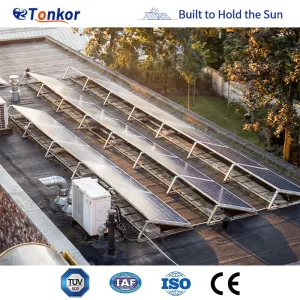
Solar Flat Roof Ballast Mount

New Aerodynamic Ballast Flat Roof Solar Mounting Solution

View Details
Aluminum Flat Roof Solar Mount

Aluminum Flat Roof Solar Panel Mounting Rack with Ballast Roof System

View Details
Solar Mounting System Manufacturer

Pandasolar Flat Roof Solar Ballast Mounting System Aluminum Manufacturer

View Details
Solar Ballast Roof Mount Kits

Support Solar Flat Roof Solar Ballast Roof Mount Kits Solar PV in Roof Mounting

View Details
Flat Roof Solar Mounting System

Flat Roof Solar Mounting System Triangle Ballast Fixed Bracket Aluminium Structure

View Details
Solar Mounting Ballast System

Solar Mounting Ballast Type System Solar Ballast Roof Mount on Flat Roof

View Details
Z-Shape Ballast Rack

Wholesales CE Certification Z-Shape Ballast Rack System Mount for Flat Roof

View Details
Customized Solar Panel Mounting

Customized Aluminum Solar Panel Mounting for Flat Roof Ballast

View Details

Technical Architecture and Engineering Highlights

Optimized Structural Engineering

Trike Solar's design team utilizes state-of-the-art software (such as SolidWorks, AutoCAD, and ANSYS) to model and stress-test the structural behavior of every ballast configuration. Our systems are engineered to isolate physical stresses. In traditional installations, wind uplift forces transmit mechanical stress directly to the roof anchor points. In contrast, our ballasted racking redirects structural loads across the grid of interconnected support rails, distributing forces evenly and staying within structural limits of existing concrete slabs.

This grid-wide mechanical connectivity ensures that localized high-pressure wind gusts (such as those impacting corner modules) are resisted by the mass of the entire array, not just the affected panel. EPDM rubber cushioning sheets placed underneath each rail interface act as friction enhancers and protect the concrete's waterproofing membrane against long-term abrasion caused by thermal expansion cycles.

Materials & Advanced Coatings

For coastal settings like Hai Phong, standard materials decay rapidly. Our raw materials are chosen according to strict international specifications:

  • Anodized Aluminum (AL 6005-T5): Specifically heat-treated to maximize yield strengths and structural rigidity while maintaining a light weight. The clear anodized coating functions as a barrier against salt air corrosion.
  • Stainless Steel Fasteners (SUS304/316): Known for excellent corrosion resistance, these components prevent galvanic corrosion between dissimilar metals (e.g., steel and aluminum interface).
  • Hot-Dip Galvanized Elements: Used for heavy steel ballast trays or ground foundation structures. We guarantee zinc coatings exceeding 80μm thickness to match structural lifetime expectations of 25 years.

Alternative Racking and Specialized Bracket Variants

Explore specialized designs engineered for unique roof loadings, low tilt angles, and high-capacity industrial layouts.
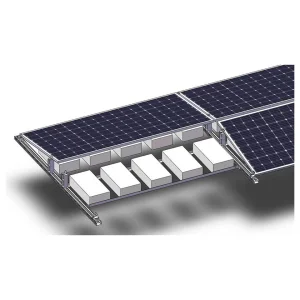
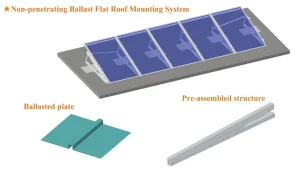
Aluminum Solar Panel Mounting Bracket

Aluminum Solar Panel Mounting Bracket Ballast Solar Panel Mounting for Flat Roof Mount

View Details
Tilted Mounting Kit

Manufacturer Supported Flat Roof Solar Panel Tilted Mounting Kit with Ballast Solution

View Details
Cost Effective RCC Ballast

Cost-Effective Rcc Ballast Solar Mounting for Flat Roof Applications

View Details
Aluminum Ballast Solar Mount

Efficient Aluminum Ballast-Based Solar Mount for Flat Roofs

View Details

Frequently Asked Questions

Find answers to key technical, structural, and logistics questions concerning flat roof ballast racking deployments in Vietnam.

What wind speed limits can Trike Solar's ballast systems withstand?
Our systems can be engineered to withstand wind speeds of up to 60 m/s (216 km/h), which exceeds the requirements for Typhoon Class III zones in northern Vietnam. This is achieved by combining structural wind deflectors (which produce downward aerodynamic pressure) with calculated concrete block layouts designed specifically for local site coordinates.
How does a non-penetrative ballast mount prevent roof leaks?
Instead of drilling anchor bolts into the roof structure, the mounting framework sits on pre-cast concrete blocks (ballast). Gravity, friction, and aerodynamic downforce keep the system locked in position. The addition of durable EPDM protective pads beneath the aluminum base rails prevents physical rubbing and preserves the factory roof's waterproofing membrane.
What corrosion protection is used for near-shore coastal installations in Hai Phong?
We use structural-grade anodized aluminum (AL6005-T5) with an anodizing thickness of ≥12-15μm, coupled with marine-grade stainless steel fasteners (SUS304 or SUS316). For projects located very close to the coastline, we can customize anodizing up to 20μm (Class AA20) to guarantee a service life of over 25 years.
What is the transit time from your China factory to Hai Phong?
Because our primary manufacturing base is in Xiamen, China, we benefit from direct shipping routes. Sea transit to major ports in Hai Phong takes only 3 to 5 days. This enables rapid procurement timelines, allowing project developers to meet tight installation schedules.
Does Trike Solar provide structural calculations for local permit approvals?
Yes, our experienced in-house engineering team provides complete structural calculation calculations (stating dead load, wind uplift forces, and safety factors) in compliance with international standards (AS/NZS 1170, ASCE 7-16, etc.) to support your project engineering submittals and local permit applications.

Request an Aerodynamic & Structural Wind Calculation for Your Hai Phong Project

Submit your roof layout dimensions, local wind load criteria, and panel specifications. Our structural engineers will provide a customized ballast layout design and competitive factory quotation within 48 hours.

Send Inquiry Now